






Staff Augmentation Company

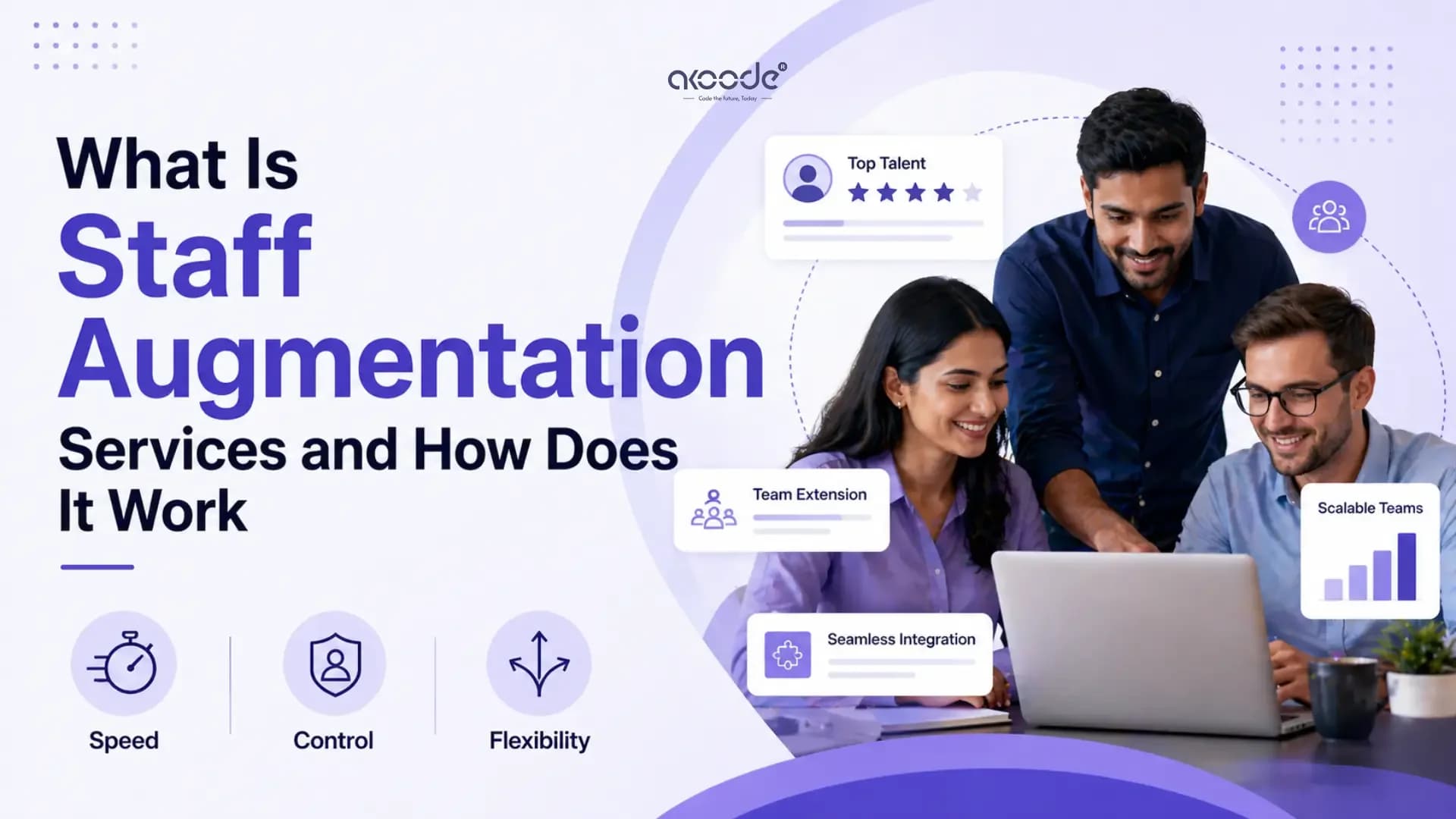
Most hiring plans die in the six weeks between "we need a senior backend engineer" and someone actually starting. Akoode is a staff augmentation company that closes that gap. We place vetted engineers, designers and QA specialists directly inside your team, working your sprints, your tools and your standups, so a skill gap stops being a quarter-long project of its own.

4.9

Google Rating

97%

Client Retention

180+

Clients Served

15+

Industries Served

The Hire You Need Takes Longer to Find Than the Problem Can Wait

A senior engineer opening in 2026 takes, on average, longer to fill than the sprint that actually needed them.

By the time an offer gets signed, the roadmap has usually moved twice.

Akoode is not a recruitment agency that hands you a resume and disappears.

Traditional hiring solves none of this on a useful timeline. Three to four months is normal.

There is a second, quieter cost too. Every open role is a role your existing team is covering informally, usually badly, usually at the expense of the thing they were actually hired to do.

Our Staff Augmentation Services

Every placement gets scoped against a specific gap and a defined outcome, not a generic headcount request. The models below are the ways we combine engineers into your team; most clients use one or two.

01

IT Staff Augmentation

2-3 WeeksOn Request

What it is:

Individual engineers, designers, QA specialists or DevOps professionals added directly into your existing team and reporting into your process.

Problem it solves :

A defined skill gap on a team that otherwise runs fine, where hiring permanently would be slower and more expensive than the gap justifies.

Typical engagement:

We shortlist within days against your actual stack, run a technical screen alongside your team if you want visibility, and the engineer joins your standups, your sprint tooling and your codebase inside two to three weeks.

Outcome:

The gap closes without a six-month hiring cycle, and you keep full control over how the work gets prioritised.

  1. Shortlist & fit engineers
  2. Technical screening with your team
  3. Onboarding & integration
  4. Active delivery in your sprints
  5. Review & continuous support
02

Dedicated Development Team Extension

03

Short-Term & Project-Based Augmentation

04

Specialised Skill Augmentation

05

Offshore Staff Augmentation

06

Contract-to-Hire Augmentation

07

Managed Staff Augmentation

Capabilities Most Staffing Vendors Do Not Carry

Placing a resume is the easy part of this business. The capabilities below are what decide whether that placement actually works six months in.

01

Rapid Technical Vetting

Every engineer clears a structured technical assessment specific to your stack before you see a profile, not a generic aptitude test. You are shown candidates who have already proven the specific skill, not ones who might grow into it.

02

Security and Compliance Onboarding

Background checks, NDA execution, access provisioning and compliance training run before day one, scaled to what your industry actually requires. A financial services client and an early-stage startup do not need the same onboarding, and we do not treat them like they do.

03

Time Zone Aligned Delivery

Overlap hours are set deliberately against your team's working day, not left to chance. Standups, code review turnaround and incident response are planned around when your team is actually online.

04

Tooling and Access Provisioning

Engineers arrive ready to work in your stack: repository access, CI/CD, project management tools and communication platforms configured before the first standup, not fumbled through in week two.

05

Performance Management and Replacement

Placements are monitored against agreed expectations, not left to surface problems on their own. If a placement genuinely is not working, replacement happens fast and without the awkward renegotiation most vendors put you through.

06

Scalable Ramp Up and Ramp Down

Team size flexes with the roadmap in both directions. Adding a second engineer for a crunch period, or releasing one once a project winds down, does not require renegotiating the entire arrangement each time.

Staff Augmentation, Dedicated Teams, or Full Outsourcing: Which One Actually Fits

These three models get used interchangeably in sales conversations, and they should not be. Each solves a different-shaped problem, and picking the wrong one is the most common reason an engagement disappoints on both sides.

Do you have an existing team and leadership in place?

Do you need ongoing support to build and scale your product?

Do you want the vendor to own delivery of a defined outcome?

Staff Augmentation

Dedicated Team

Full Project Outsourcing

If your team already has strong technical leadership and simply needs more hands executing against that direction, staff augmentation is usually the right call.

If you are missing that leadership entirely, or the whole product needs building from a standing start, a dedicated team or a fixed-scope project is often the more honest answer, and we will tell you so during scoping rather than sell augmentation because it is the easier close.

Staff Augmentation

A defined skill gap on a team that already has process and leadership in place

Who directs the work

Your team, your process

Typical duration

Weeks to several months

Dedicated Team

A roadmap larger than current headcount, ongoing product development

Who directs the work

Shared, with your product direction

Typical duration

Months to years

Full Project Outsourcing

A defined deliverable where you do not want to manage day-to-day execution

Who directs the work

The vendor, against agreed specs

Typical duration

Fixed project length

!

When Staff Augmentation Is Not the Right Fit

Augmentation works badly when a team has no existing technical leadership to plug an engineer into, when the work needs a single accountable vendor for a fixed deliverable, or when the gap is really a process problem that more headcount will not fix.

We would rather say that in the first call than three months into a placement that was never going to work.

Where Staff Augmentation Stands in 2026

None of this is a forecast. These are the conditions already shaping hiring budgets and staffing decisions this year.
Engineering team reviewing 2026 staff augmentation hiring trends

Why is AI and machine learning skill augmentation growing so fast?

Demand for AI and ML engineers has outpaced the hiring pipelines of most companies outside a handful of tech hubs, and permanent hiring timelines for these roles now regularly stretch past what a roadmap can absorb. Businesses that would never have considered augmentation for a backend role are augmenting AI positions specifically, because the permanent hiring market for that skill is simply too thin and too slow.

Has remote-first hiring changed what staff augmentation actually means?

The stigma around remote and augmented engineers has mostly evaporated. Teams that spent 2020 through 2023 proving remote work functions now treat a well-integrated augmented engineer the same as a local hire on a video call, which has quietly expanded the addressable talent pool for every business willing to hire that way.

Why are more companies choosing contract-to-hire over direct hiring?

Direct hiring based on a resume and a handful of interviews has a quietly high failure rate, and businesses are increasingly aware of it. Contract-to-hire lets both sides see months of real working evidence before either commits permanently, and its popularity is rising specifically because it removes the guesswork a traditional interview loop cannot.

How has nearshoring and offshoring changed for staff augmentation in 2026?

Time zone overlap has become the deciding factor over raw cost difference for a growing share of buyers. Businesses are less willing to accept a five or six hour communication gap than they were even two years ago, which has pushed offshore staffing providers to structure working hours around client overlap rather than around convenience for the provider.

Why do compliance and security expectations now shape every staffing decision?

Data protection regulation has tightened across most major markets, and clients evaluating an augmented engineer now routinely ask about background checks, access controls and NDA terms before a single technical question. Staffing vendors without a genuine compliance process are increasingly screened out before the conversation even reaches skill fit.

Staff Augmentation Across 15+ Industries

The right engineer for a healthcare platform and the right engineer for a logistics system rarely overlap, and staffing without that context produces mismatches that surface months too late. Here is how our staff augmentation work shows up across the 15 industries we serve.

Real Estate

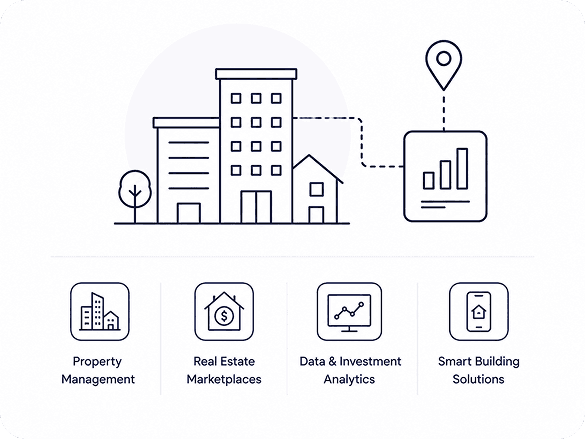
Property platforms move in bursts, a new listing feature before a launch window, a CRM integration before a sales push, and permanent headcount rarely matches that rhythm. We place engineers who already understand listing data, booking flows and CRM integrations, so ramp-up does not eat the first month of a short engagement.

Real Estate
Explore Real Estate

Healthcare

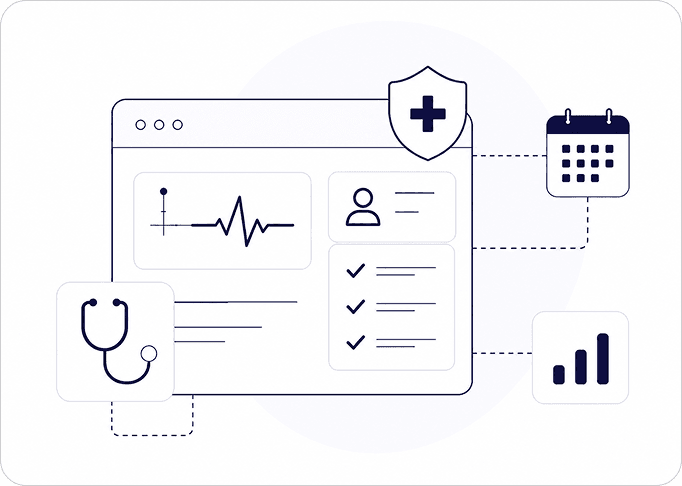
Compliance sits on top of every technical decision here, so we vet augmented engineers on HIPAA-adjacent handling and consent-aware architecture, not just general backend skill. Clients get engineers who ask the right questions about patient data before writing a line of code, which matters more in this sector than almost anywhere else.

Healthcare
Explore Healthcare

Retail & E-Commerce

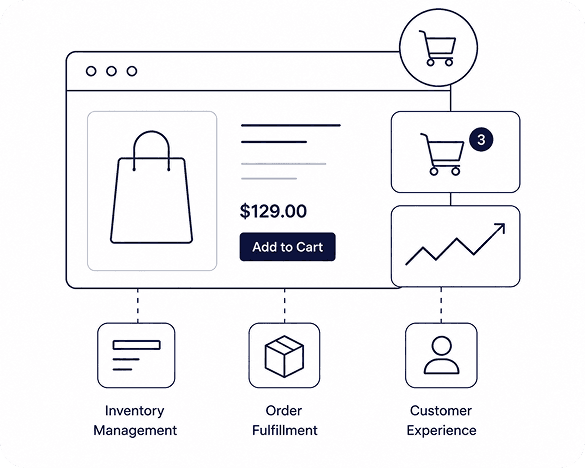
Retail engineering demand spikes hard around major sales events and thins out afterward, which makes permanent headcount an awkward fit for a meaningful share of the work. We staff for the spike specifically: catalogue, checkout, and performance engineers who can ramp fast and hand off cleanly once the peak has passed.

Retail & E-Commerce
Explore Retail & E-Commerce

Media & Entertainment

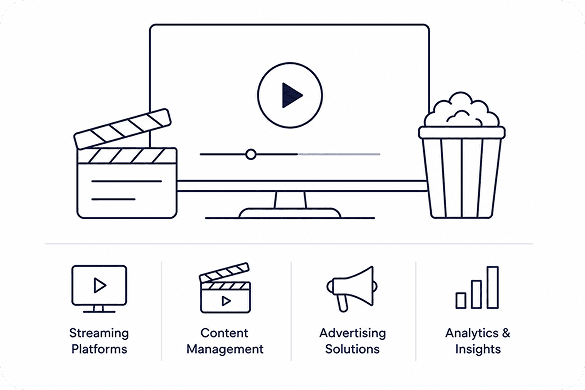
Publishing and streaming platforms need engineers comfortable with heavy traffic spikes and content pipelines, a specific enough skill set that generalist hires often underperform on it. We place engineers with genuine experience in high-traffic content delivery rather than adjacent web experience stretched to fit.

Media & Entertainment
Explore Media & Entertainment

Finance & Banking

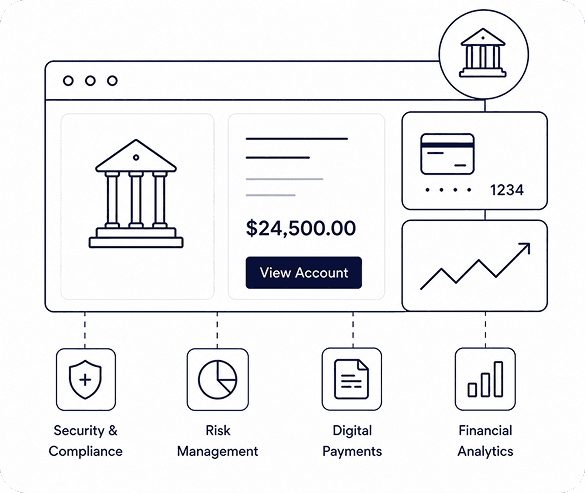
Security and audit requirements shape every augmentation placement in this sector, so vetting includes data handling discipline alongside technical skill. Clients in finance also tend to need engineers comfortable with legacy system integration, which we screen for specifically rather than assuming general backend skill transfers cleanly.

Finance & Banking
Explore Finance & Banking

Automotive

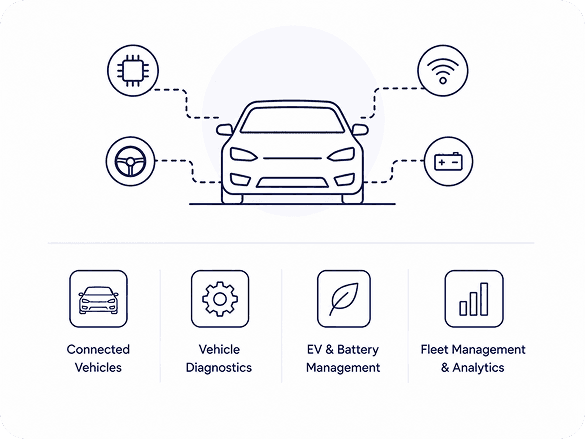
Automotive clients often need a specific mix, embedded systems knowledge alongside standard web and mobile skill, which is a narrower pool than most staffing vendors maintain. We place engineers who have actually shipped in automotive or adjacent IoT contexts, not generalists reading documentation for the first time on the client's dime.

Automotive
Explore Automotive

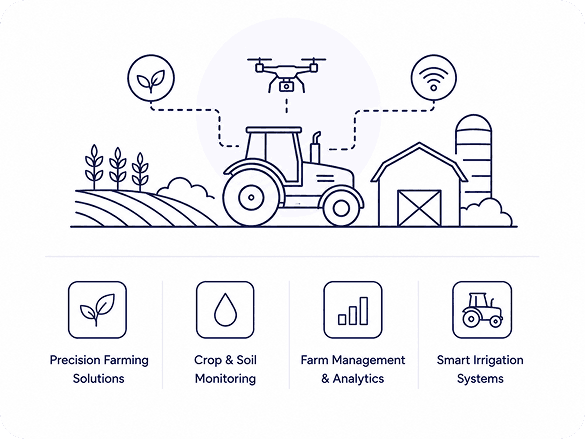
Agriculture

Agri-tech engineering work often needs to run on constrained infrastructure and patchy connectivity, a real constraint that generalist engineers frequently underestimate. We place engineers with genuine low-connectivity and lightweight-architecture experience, which shortens the learning curve considerably on these placements.

Agriculture
Explore Agriculture

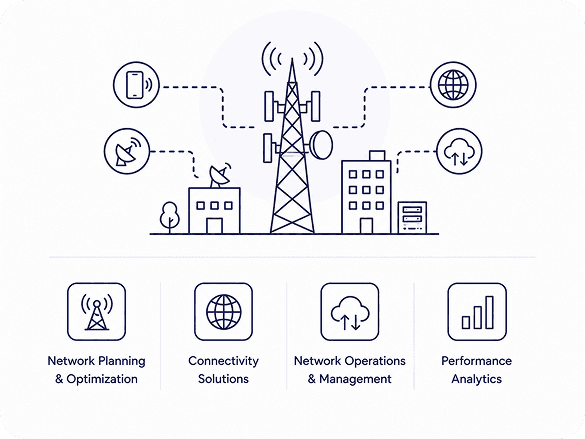
Telecommunication

Telecom systems demand engineers comfortable with real-time provisioning and high-availability requirements, skills that do not show up reliably on a standard resume screen. Our vetting for telecom placements weighs production experience with uptime-critical systems specifically, not general infrastructure familiarity.

Telecommunication
Explore Telecommunication

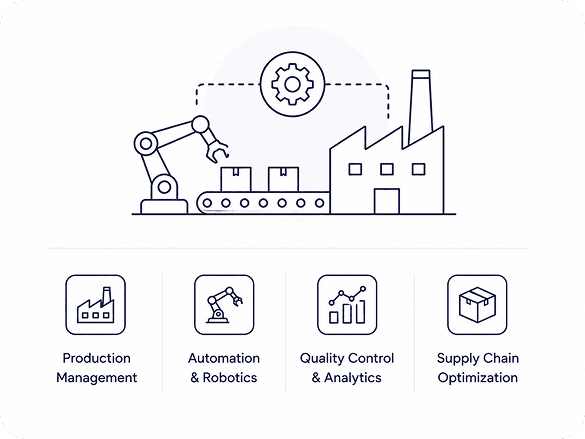
Manufacturing

Manufacturing clients frequently need engineers who can work against ERP integration and shop-floor data systems, an unusually specific combination. We maintain a pool of engineers with genuine manufacturing-adjacent experience rather than staffing generalists and hoping the domain knowledge catches up.

Manufacturing
Explore Manufacturing

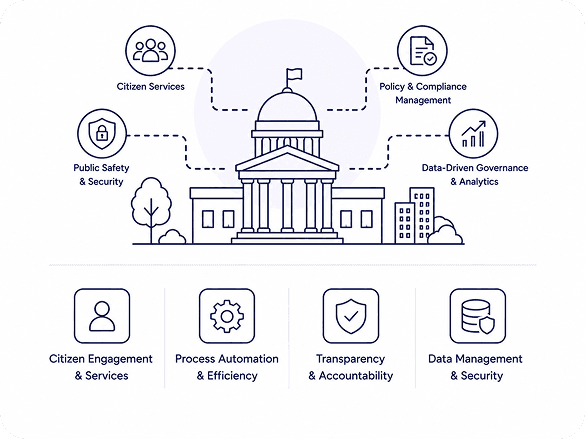
Public Sector & Government

Government engagements carry procurement and compliance requirements that most staffing vendors are not set up to handle smoothly. We structure augmentation placements against those requirements from the outset, including the documentation and audit trail public sector clients typically need.

Public Sector & Government
Explore Public Sector & Government

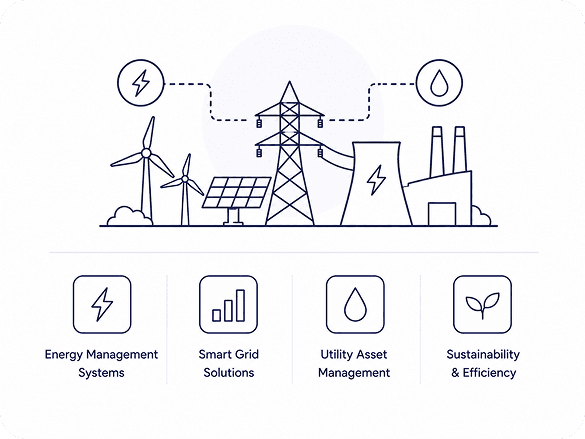
Energy & Utilities

Utilities engineering often involves legacy billing systems that are genuinely difficult to work with, and generalist engineers tend to underestimate how much time that adds. We place engineers with real experience navigating exactly that kind of legacy complexity, which avoids a slow and expensive ramp-up period.

Energy & Utilities
Explore Energy & Utilities

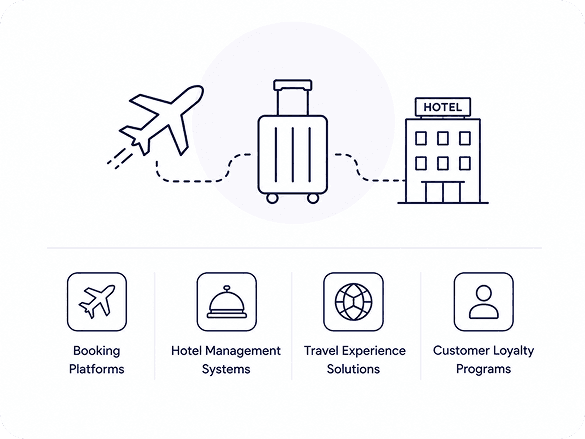
Travel & Hospitality

Booking and inventory systems in travel carry unusual complexity around real-time availability and dynamic pricing, a skill set narrower than general ecommerce experience. We staff engineers who have specifically worked on perishable-inventory systems, which is a meaningfully different problem than a standard product catalogue.

Travel & Hospitality
Explore Travel & Hospitality

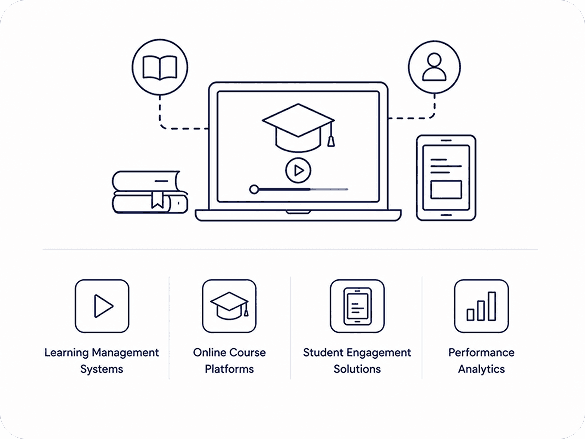
Education & E-Learning

Ed-tech platforms need engineers comfortable with enrolment systems, content delivery at scale and accessibility requirements, often all at once. We place engineers with genuine experience across that combination, rather than generalists who have only touched one piece of it.

Education & E-Learning
Explore Education & E-Learning

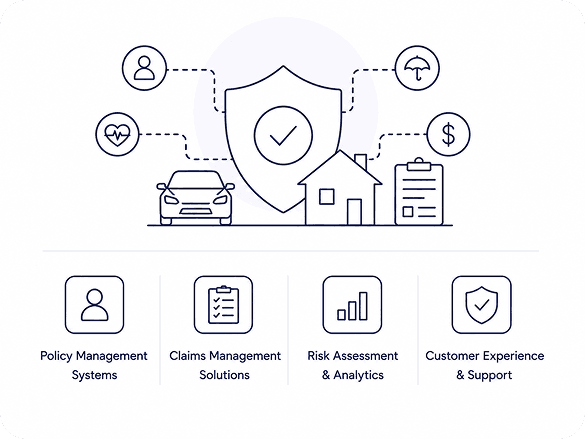
Insurance

Insurance engagements demand engineers who understand underwriting logic and regulatory disclosure requirements well enough to build for them, not just around them. Our vetting for insurance placements specifically checks for that domain exposure, because generic backend skill alone tends to miss the compliance nuance.

Insurance
Explore Insurance

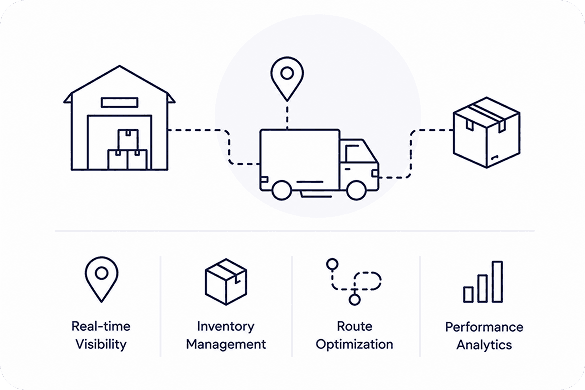
Logistics & Supply Chain

Logistics platforms run on carrier API integrations and real-time tracking systems that reward specific prior experience heavily. We place engineers who have shipped genuine logistics integrations before, which cuts weeks off the ramp time a generalist engineer would otherwise need.

Logistics & Supply Chain
Explore Logistics & Supply Chain

Roles and Skills We Staff

Technology choices in mobile development have long-term consequences. A framework chosen for short-term development speed can become a liability when the platform releases a major update, when the team scales, or when the product needs capabilities the framework was not designed for. We select the stack based on your product requirements, your timeline, and where this application needs to be in three years, not just at launch.

React logoReact
Next.js logoNext.js
Angular logoAngular
TypeScript logoTypeScript

Our Staff Augmentation Process

Six steps, and the first one matters more than people expect. Get the scoping wrong and everything after it inherits the mistake.

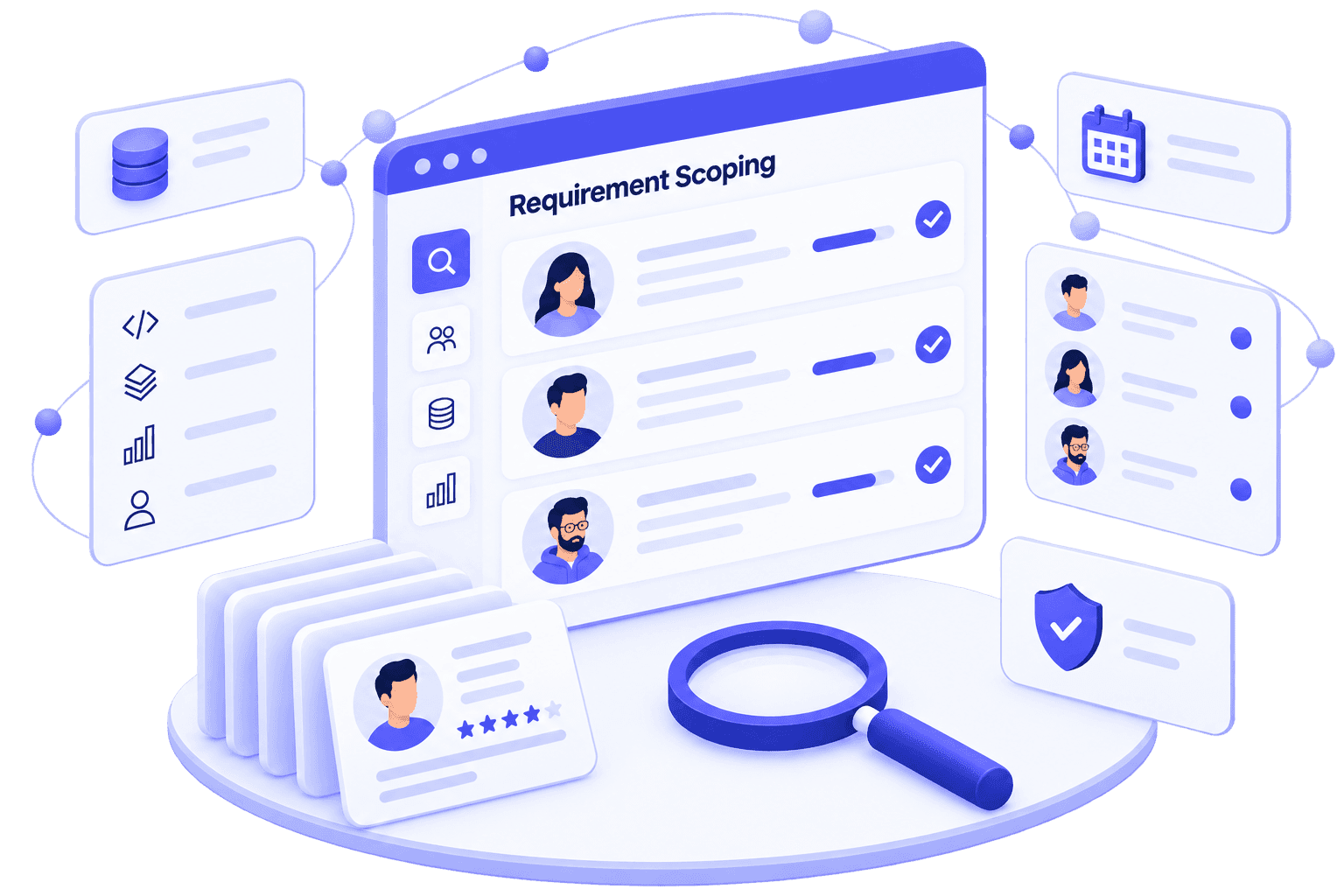
Stage 01: Requirement Scoping

Most bad placements trace back to a requirement that was never actually specific: "a senior developer" instead of the real shape of the gap, the stack, the domain, the seniority, the actual problem this person needs to solve. We spend real time here, asking the questions a generic staffing form never asks, because a precise requirement is what makes everything downstream fast instead of a guessing game.

Outcome: A vague brief produces a vague shortlist, no matter how large the candidate pool behind it.

Stage 02: Candidate Shortlisting

Profiles come from our existing vetted pool first, which is why shortlists usually arrive within days rather than weeks. Each candidate gets matched against the specific requirement from step one, not a generic seniority label, so you are reviewing people who could actually do this job, not people who might grow into it eventually.

Outcome: A fast shortlist that ignores the real requirement wastes more time than a slower, accurate one.

Stage 03: Technical Vetting

Every shortlisted engineer clears a structured technical assessment specific to your stack, run by engineers who actually work in it, not a generic aptitude test scored by someone unfamiliar with the technology. You can sit in on the technical interview yourself if you want direct visibility, and most clients do at least once before trusting the process fully.

Outcome: Vetting against the actual stack catches the gaps a resume and a friendly interview never will.

Stage 04: Onboarding and Access

Repository access, CI/CD, project tools and communication platforms get configured before day one, not fumbled through during the engineer's first week on your clock. Security and compliance onboarding runs in parallel, scaled to what your industry actually requires rather than a one-size checklist.

Outcome: An engineer who spends week one requesting access is an engineer you are paying to wait.

Stage 05: Ramp and Integration

The engineer joins your standups, your sprint tooling and your codebase from day one, working your process rather than a separate one bolted alongside it. We check in specifically during the first two weeks, because that window is where most integration problems either resolve quickly or start compounding quietly.

Outcome: Real integration into your workflow is what separates augmentation from a contractor working in isolation.

Stage 06: Ongoing Management and Replacement

Placements get monitored against the expectations agreed at scoping, not left to surface problems on their own months later. If something genuinely is not working, replacement happens fast and without the drawn-out renegotiation most staffing vendors put clients through.

Outcome: A placement that stops working should be fixed in days, not carried for a quarter out of contractual inertia.

Stage 1 of Akoode's staff augmentation process: requirement scoping
SCOPING

Requirement Scoping

Most bad placements trace back to a requirement that was never actually specific: "a senior developer" instead of the real shape of the gap, the stack, the domain, the seniority, the actual problem this person needs to solve. We spend real time here, asking the questions a generic staffing form never asks, because a precise requirement is what makes everything downstream fast instead of a guessing game.

A vague brief produces a vague shortlist, no matter how large the candidate pool behind it.
Flexible Engagement Models for Staff Augmentation

Every gap has a different shape, so there are three ways to work with us. Pick whichever fits how defined your requirement is right now and how long the capacity needs to stay in place.

Long-Term Dedicated Hire

Best for: teams that need a dedicated engineer functioning as a full-time equivalent for the long haul

  • A dedicated developer who works exclusively on your product, not split across other client accounts
  • Functions as a true FTE extension of your team, same engineer, same context, month after month
  • Priced as a flat monthly rate per resource, not an hourly meter running in the background
  • Built for teams that know this isn't a three-month gap, it's a permanent seat they're not ready to hire locally for yet
  • Lower effective cost per hour than short-term engagements, since neither side is re-negotiating scope every few weeks
MOST POPULAR

Monthly & Hourly Billing

Best for: flexible capacity where the workload shifts month to month, or you just need a defined number of hours

  • Choose a monthly retainer for predictable recurring capacity, or pure hourly billing when the ask is smaller and doesn't justify a full monthly block
  • Scale hours up during a sprint crunch, scale down the moment things calm down, no renegotiation required
  • Transparent hourly rate by skill and seniority, so you know exactly what a senior DevOps hour costs versus a mid-level QA hour
  • No minimum long-term commitment, month-to-month or hour-by-hour, cancel or adjust with notice
  • The right fit when you're still validating whether this is a long-term need or a short-term gap

Quarterly Billing

Best for: enterprise teams whose budget cycles and procurement approvals run on a quarterly rhythm

  • One quarterly invoice instead of three separate monthly ones, built for finance teams that plan and approve spend in quarters
  • Locked-in rate for the full quarter, so a rate change mid-cycle never surfaces on an unexpected invoice
  • Meaningful cost savings versus month-to-month billing, in exchange for the quarter-long commitment
  • Fits naturally alongside enterprise procurement and vendor approval processes that already run on this cadence
  • Capacity planning done once per quarter instead of re-litigated monthly

Work That Speaks for Itself

A few placements where the right engineer changed the number that mattered.

Travel-Based Dating Mobile App

Key Outcomes

100%

SRS Scope Delivered

3

Subscription Tiers

Challenge

The commoditisation of swipe-based dating interfaces has left users with a product category that looks and behaves almost identically across every major platform. The gap is not in features. It is in the match model itself. No platform had built a meaningful system around travel intent, future location overlap, or visual compatibility indicators that updated based on real interaction. Building one required solving technical problems in real-time scoring, multi-location matching, and video call reliability that most mobile dating products had never needed to address.

What We Built

The brief covered a full consumer dating product with a novel compatibility mechanic at its core. Every objective connected directly to something that did not exist in the current market: travel-based matching, a visual chemistry indicator, real-time speed dating, and a subscription model that monetised engagement depth rather than just volume. The finished product needed to feel genuinely distinct from every app already on the App Store.

AI-Powered Medical Diagnostic System

Key Outcomes

99.1%

Spine Detection Accuracy

98.4%

Chest Pathology Accuracy

Challenge

Radiology departments in emergency and trauma settings are caught between two pressures that pull in opposite directions. Imaging volumes keep rising. The tolerance for missed diagnoses stays at zero. A hairline cervical fracture overlooked during a busy overnight shift, or a pneumonia finding buried halfway down a full worklist, carries consequences that extend well beyond clinical error. Existing AI tools have added a third problem on top of both: they produce outputs without explanation, and clinicians who cannot see why a model flagged something are right to be cautious about acting on it.

What We Built

The brief was specific: a dual-stream diagnostic system that could detect cervical spine fractures at individual vertebra level and classify chest pathologies from X-rays, process each study in under two seconds, and present findings with visual explainability that clinicians could act on without second-guessing the model. Accuracy targets were set at specialist-comparable benchmarks. The clinical interface needed to triage automatically, not just classify.

AI Player Performance Tracking Case Study

Key Outcomes

10x

Faster Coaching

94%

Tracking Accuracy

Challenge

Performance coaching at the elite level demands data granularity that traditional video review simply cannot deliver. Coaching teams were spending enormous amounts of time rewatching unstructured footage, drawing conclusions by observation, and making player evaluation decisions without a single objective metric to support them. The problem was not effort. It was the absence of the right system.

What We Built

The client needed a next-generation AI system that could take raw, unstructured game footage and turn it into structured, real-time performance intelligence that coaching staff could act on immediately. Every objective defined at the start of this project was tied directly to a coaching workflow problem that needed solving.

What Our Client Says

Akoode Technologies has done a fantastic job developing a custom web application for my global real estate firm. What really stood out was their deep research and data integration for different countries and cities, which added huge value to our platform. The design is modern, sleek, and user-friendly. From start to finish, their team was professional, supportive, and highly skilled. Yes, the pricing is slightly on the higher side, but the quality, speed, and long-term results make it completely worth it.

Ankit Goyal
Founder & CEO
WeGrow InfraVentures

Why Choose Akoode Technologies as Your Staff Augmentation Company

Plenty of vendors can send you a resume. Choosing a staff augmentation partner is really a decision about who is accountable when that placement has to actually perform, week after week, not just on day one.

AI-First Development

Our engineering bench includes genuine AI and ML specialists, not generalists relabelled to meet demand. When a client needs AI-specific augmentation, they get engineers who have actually shipped production AI systems, which is a different pool entirely from engineers who have read about them.

End-to-End Platform Engineering

Placements are not limited to a single narrow skill. Our engineers work across frontend, backend, mobile, DevOps and infrastructure, so a team extension can flex across the roadmap instead of solving exactly one problem and stalling on the next.

Revenue-Focused Architecture

Every placement gets scoped against a commercial question: what does this role actually unblock? If a request does not have a clear answer to that question, we ask it during scoping rather than staffing around it and hoping it resolves itself.

Domain-Deep Expertise

We have staffed across 15+ industries, and it shows in the vetting: a healthcare placement and a logistics placement are screened for genuinely different things, not run through the same generic checklist.

Rapid Ramp, No Bench Time

Our vetted pool means shortlists arrive in days, not weeks, and onboarding is structured to have an engineer productive inside the first two weeks rather than treating ramp-up as an unavoidable cost you simply absorb.

Direct Access and Fast Replacement

You work directly with the engineer, not through a relay of account managers. If a placement genuinely is not working, replacement happens fast, without the drawn-out renegotiation most staffing vendors put clients through.

Akhilesh K Verma, Founder of Akoode Technologies

Talk Directly with Our Founder

Discuss your software vision, AI roadmap, and delivery strategy with the team leading product engineering at Akoode.

Insights on Staff Augmentation

View all
What Is Staff Augmentation Services and How Does It Work
dateApr 30, 2026

What Is Staff Augmentation Services and How Does It Work

Understand what staff augmentation services mean, how IT staff augmentation works, types available, and when to use it, a practical...

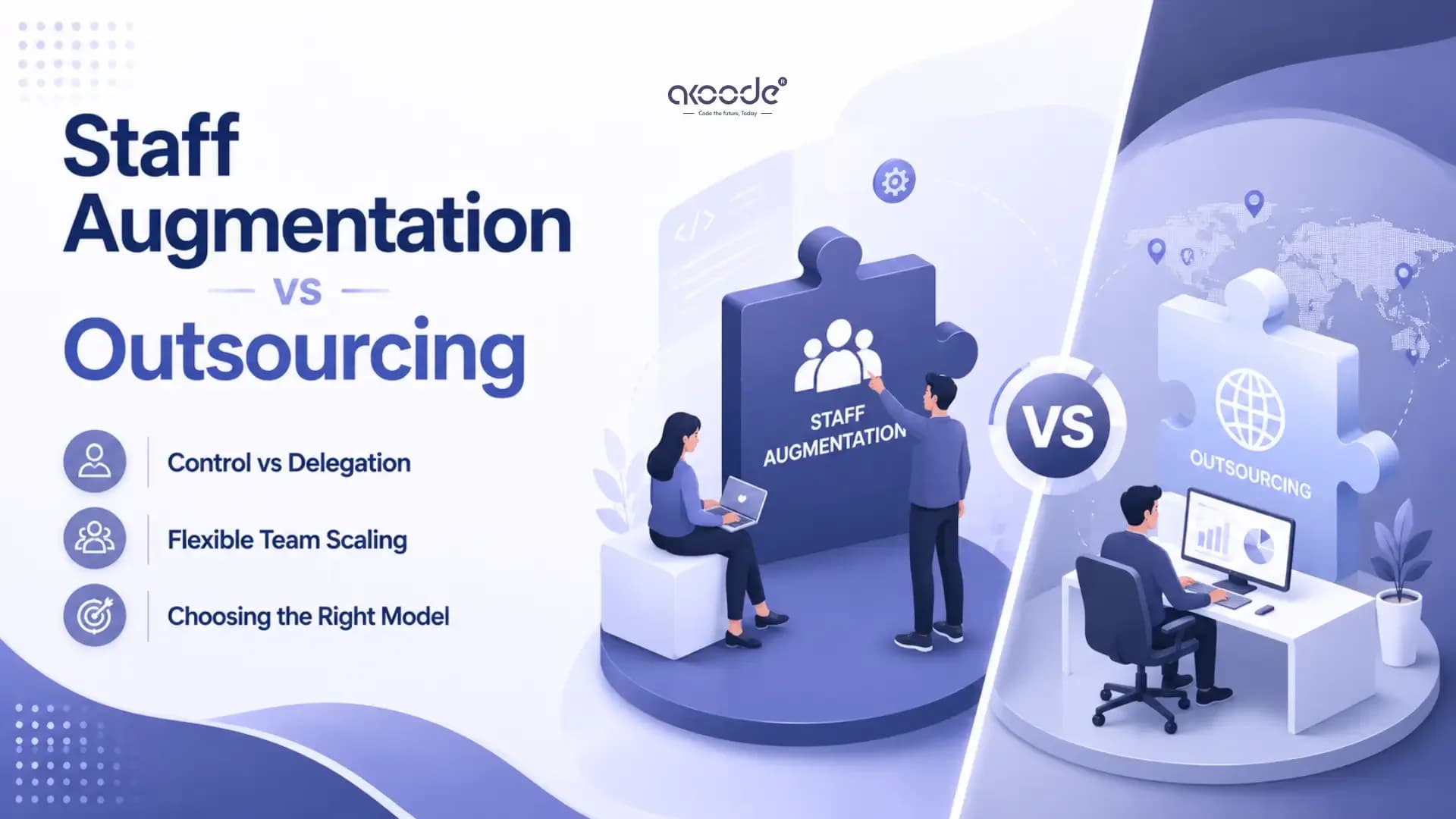
Staff Augmentation vs Outsourcing: Which Model Fits?
dateMay 20, 2026

Staff Augmentation vs Outsourcing: Which Model Fits?

Staff augmentation vs outsourcing compared by growth stage. Understand control, cost, risk, and when each model delivers the best outcome...

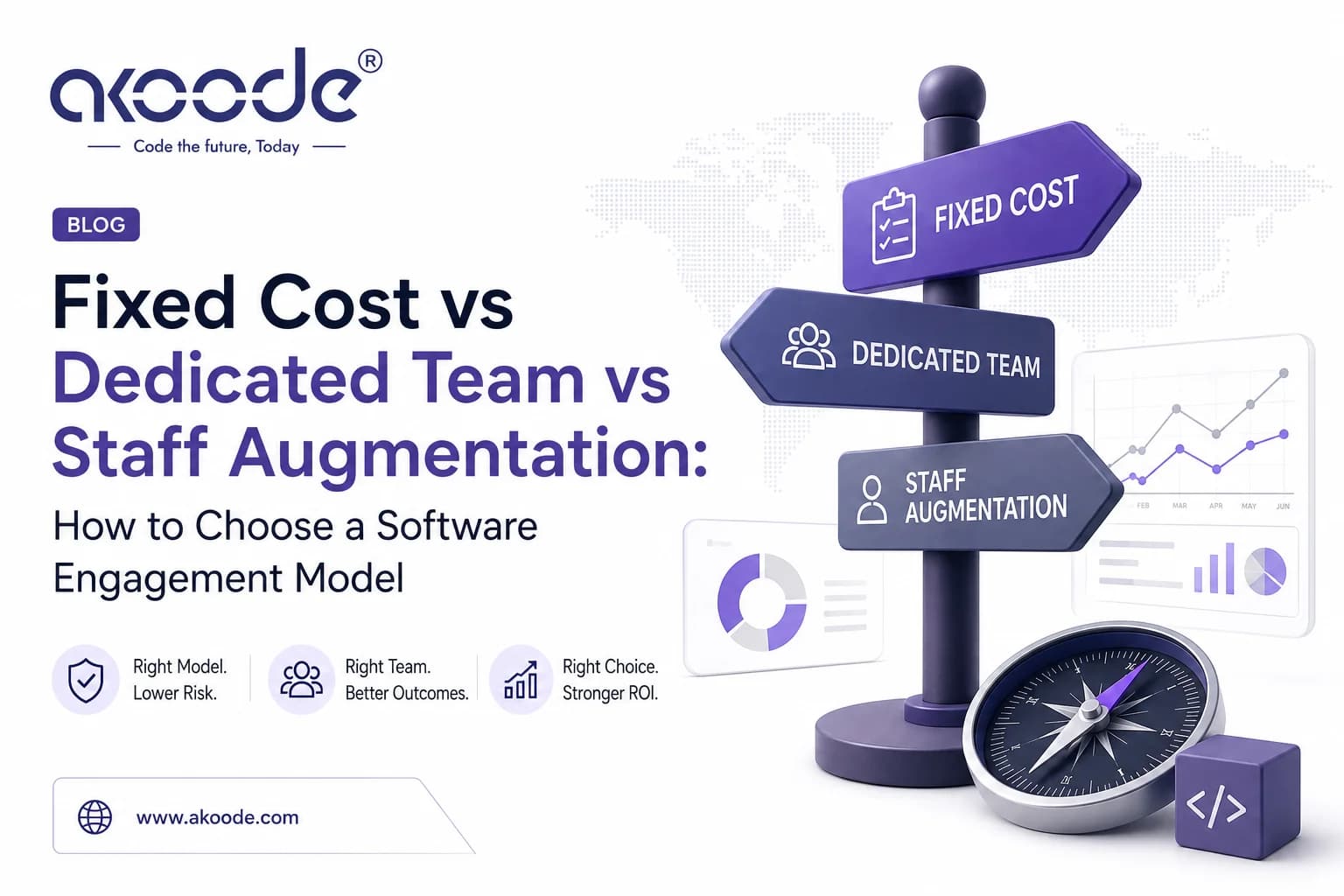
Fixed Cost vs Dedicated Team vs Staff Augmentation: How to Choose the Right Software Engagement Model
dateJul 28, 2026

Fixed Cost vs Dedicated Team vs Staff Augmentation: How to Choose the Right Software Engagement Model

Fixed cost, dedicated team, or staff augmentation? Compare cost, risk and control across all three, with a three-question framework for...

Frequently Asked Questions

Straight answers on timelines, team shape, security, and how we plug into your existing delivery process.

IT staff augmentation means adding external engineers, designers or QA specialists directly into your existing team, working your process and your tools, rather than handing a project to an outside vendor to run independently. You keep control over priorities and day-to-day direction. The augmented engineer simply becomes extra capacity inside the team you already have.

Outsourcing hands a defined deliverable to a vendor who manages execution independently and hands back a finished result. Staff augmentation keeps the work under your direction, with the augmented engineer reporting into your process the same way an internal hire would. If you want to stay in control of priorities day to day, augmentation is the closer fit.

Most single-engineer placements go from requirement to start date in two to three weeks, covering shortlisting, technical vetting and onboarding. A multi-person team typically takes three to five weeks to assemble properly. Specialised skills like AI engineering sometimes take longer simply because the qualified pool is smaller right now, and we say so upfront rather than stretch a weak match to hit a date.

It depends on seniority, skill scarcity, engagement length and location model, which is why a number quoted without knowing your specifics is usually not a real one. A senior AI engineer and a mid-level generalist sit in genuinely different brackets, and offshore, nearshore and onsite carry different cost structures for the same seniority. We give a fixed rate per role after a short scoping call.

Yes, and most clients do. You can sit in on our technical screening directly, or run your own interview once we shortlist, before anyone joins your team. The goal is confidence going in, not a resume you are trusting blind.

Replacement happens fast, without the drawn-out renegotiation some staffing vendors put clients through. Placements are monitored against the expectations agreed at scoping specifically so problems surface early rather than three months in, and if a genuine mismatch happens, we treat it as our problem to fix quickly.

Yes, and it is one of our most common engagements. Engineers are based in India working with overlap hours structured around your team's actual working day, not left to chance. Clients get senior engineering capacity at a materially different cost structure than local hiring, without the communication friction the model sometimes gets stereotyped for.

Yes, through our contract-to-hire model. Standard augmentation terms apply for an agreed period, with transparent conversion terms set before anyone starts. It gives both sides months of real working evidence before committing permanently, which a resume and a handful of interviews cannot provide.

Frontend, backend, mobile, AI and machine learning, DevOps and cloud, data engineering, QA and test automation, product design, and technical project management. If a skill is genuinely scarce right now, AI engineering is the clearest current example, we screen specifically for demonstrated production experience rather than adjacent experience stretched to fit.

Yes, a significant share of our staff augmentation work comes from clients in the US, UK and UAE. Overlap hours are set against your timezone specifically, communication runs through whatever tools your team already uses, and several of our longest-running placements have been fully remote from the very first engineer.

Start Your Project This Month

Send your brief and someone from Akoode will respond within one business day. No pitch deck, no pressure.
Reply Time
< 30 working minutes
NDA-Friendly
Signed before kickoff
IP Ownership
100% yours from day one
Security check *
= ?

Stay Informed With Thoughtful Innovation

Subscribe To The Akoode Newsletter For Carefully Curated Insights On AI, Digital Intelligence, And Real-World Innovation.

P
J
S
A
110+Happy Clients Trusted By Akoode